
Article: Fig tree care guide
,%20the%20common%20fig%20(Ficus%20carica)%20belongs%20to%20the%20Moraceae%20family.%20Its%20fruit,%20the%20fig,%20is%20an%20iconic%20symbol%20of%20the%20Mediterranean...)
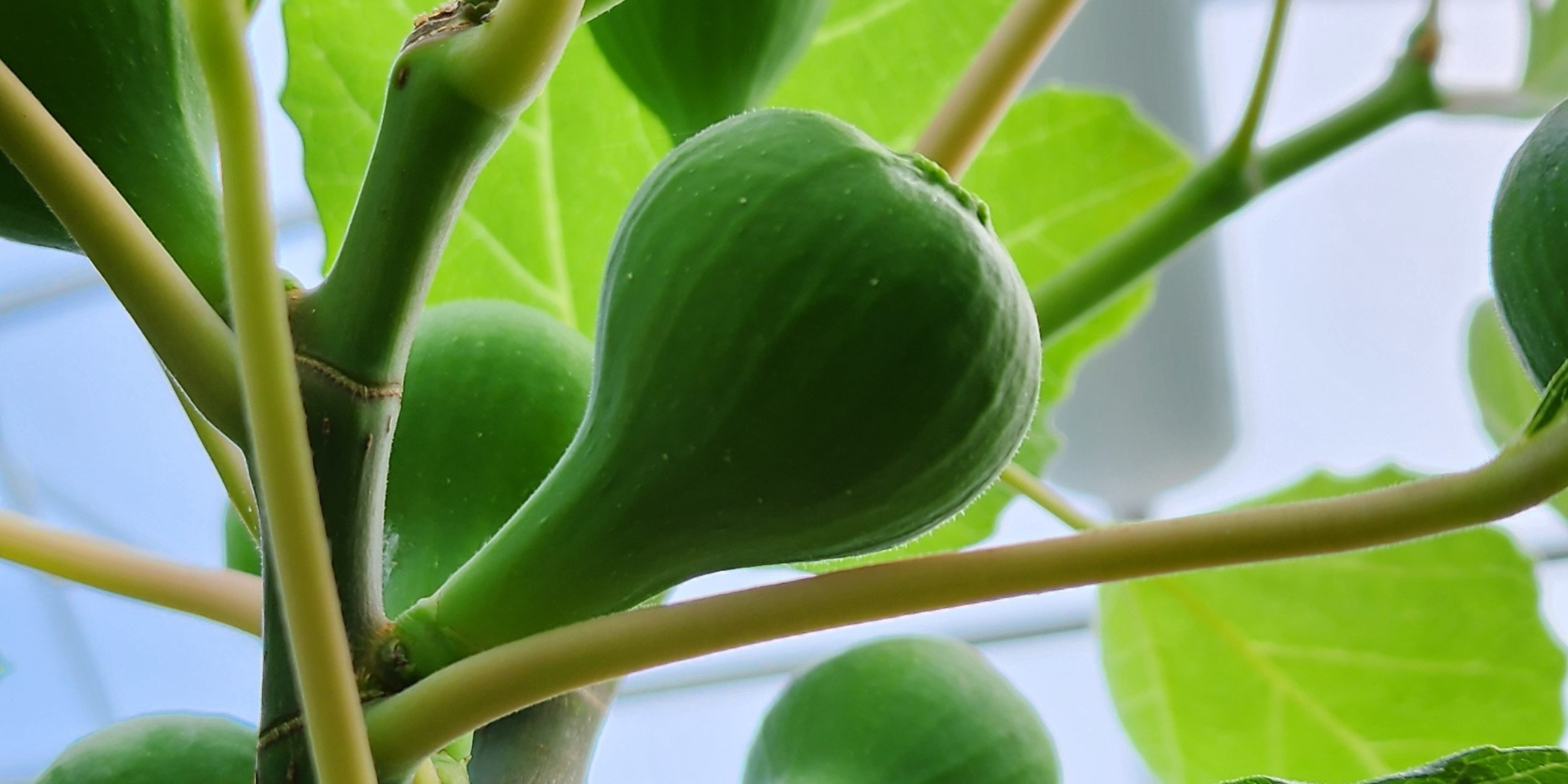
Fig tree care guide
Origin of the Fig Tree
Native to Asia Minor (roughly present-day Türkiye), the common fig (Ficus carica) belongs to the Moraceae family. Its fruit, the fig, is an iconic symbol of the Mediterranean region, where this fruit tree has been cultivated for thousands of years.
Pollination
The vast majority of fig tree varieties grown in North America are self-fertile, meaning they produce fruit without pollination (parthenocarpy). No action is required on your part for fruit production.
Some fig varieties require pollination by a tiny wasp called the fig wasp (Blastophaga psenes). This miniature wasp is essential for producing certain types of figs in Mediterranean countries and California. However, it is not found in Québec or elsewhere in Canada, as it cannot survive our winters.
Number of Harvests per Year
Common fig varieties are either uniferous (one harvest per year) or biferous (two harvests per year).
For biferous varieties, the first crop, known as the breba crop, develops on the previous year's wood. The second crop, often called the main crop or autumn crop, grows on the current season's new shoots.
Handling Precautions
Fig leaves contain compounds that may cause skin irritation. Contact with the leaves can result in itching or irritation that may last for several hours.
For this reason, it is recommended to wear long sleeves when handling or pruning your fig tree. Protective eyewear is also strongly recommended, as the tree's milky white sap (latex) can cause burns, especially if it comes into contact with the eyes.
Growing in the Ground or in Containers
Fig trees can be successfully grown in Québec either in the ground or in containers. The main factor to consider when making this choice is the winter protection method.
Because of Québec's harsh winters and the varying cold hardiness of different varieties, container growing is generally the most practical option for most gardeners.
Choosing a Container
To prevent roots from circling, a breathable geotextile container such as a Smart Pot is recommended. Containers with capacities of 10 to 15 gallons are well suited for fig trees.
If using another type of pot, make sure it has adequate drainage holes to allow excess water to escape.
Keep in mind that the type of container will affect watering frequency, so irrigation should be adjusted accordingly.
Choosing a Growing Medium
Choose a long-lasting potting mix that maintains its structure over time, such as one containing coconut coir, to reduce soil compaction.
Commercial tropical plant potting mixes or container gardening mixes are excellent choices. Adding organic marine compost to the initial mix (approximately 30% of the total volume) is also recommended.
Watering and Sunlight
Fig trees love full sun. Warm temperatures and abundant sunlight are essential for producing plentiful, sweet fruit.
Watering frequency depends on the size and type of container used. As a general rule, the growing medium should remain slightly moist but never waterlogged. Allow the soil to dry slightly between waterings while avoiding prolonged dryness.
Never leave a fig tree sitting in standing water.
Fertilizing
During the growing season (May through September), fertilize your fig tree with granular chicken manure available at garden centers, along with compost.
Do not fertilize during the tree's dormant period.
Repotting Container-Grown Fig Trees
While your fig tree is growing toward its desired size, repot it once a year into a slightly larger container.
Maintenance Pruning
Maintenance pruning consists of opening up the center of the tree to improve light penetration. Removing crossing branches also helps prevent included bark and weak branch unions.
This pruning is best performed during the dormant season.
If space is limited, pinching the terminal bud during the growing season helps control the tree's height while encouraging branching and increasing fruit production.
Dormancy and Winter Protection
Fig trees require a winter dormancy period in order to produce abundant fruit.
As temperatures and daylight decrease, the leaves naturally turn yellow before dropping.
Depending on the cold hardiness of your variety and your location, winter protection is usually necessary, as most fig trees cannot withstand Québec's winter temperatures without assistance.
Method 1
Before the first snowfall, gently bend the tree to the ground outdoors and cover it with an insulating winter blanket available at garden centers.
The snow that accumulates over the cover provides additional insulation, protecting the tree from extreme cold.
In spring, once the snow has melted and the risk of severe frost has passed, remove the cover and raise the tree.
Method 2
Store the dormant tree for the winter in a garage or another cool location maintained at approximately 5°C (41°F), with a maximum temperature of 10°C (50°F) and minimal light.
Water lightly about once a month to prevent the roots from drying out.
Do not fertilize during dormancy.
Common Pests
Mealybugs
Mealybugs are oval-shaped insects covered with a white, powdery wax. They are especially common in warm, humid conditions.
Signs of infestation include white cotton-like deposits on the leaves, sticky residue (honeydew), or black sooty mold.
Small infestations can often be controlled by manually removing the insects. Larger infestations can be reduced by rinsing the plant with water or spraying it with a mixture of water, insecticidal soap, and rubbing alcohol.
Although more expensive, biological control using beneficial insects such as Cryptolaemus (the mealybug destroyer) or green lacewings is also an effective option.
Two-Spotted Spider Mites
The two-spotted spider mite, commonly known as the red spider mite, may also infest fig trees, particularly in hot, dry conditions.
Fine webbing is often the first sign of their presence. Adults may appear yellow with two dark spots, or red to orange in color.
As infestations worsen, leaves become yellow, grayish, or bronze before dropping.
Regular misting of the foliage and more frequent watering can help slow their spread. Predatory mites and other beneficial insects are also available from biological control suppliers.
Wildlife
When grown outdoors, figs may attract squirrels, chipmunks, raccoons, and mice. Be sure to monitor your trees as fruit begins to ripen.
Fig Varieties Available at La Vallée du Moulin
Chicago Hardy — Biferous. Small purple figs with red flesh. Very sweet berry-like flavor.
Lattarula — Biferous. Medium-sized yellow-green figs with light amber flesh. Honey-like flavor.
Texas Everbearing — Biferous. Medium-sized figs with green and purple skin and amber to pale pink flesh. Mildly sweet flavor.
Black Mission — Biferous. Medium-sized figs with dark purple skin and pale red flesh. Notes of berries, honey, and dried fruit. One of the world's best-known and most widely cultivated fig varieties.
Ischia — Biferous. Medium to large yellow-green figs with red flesh. Sweet with a pleasant hint of acidity.
Violette de Bordeaux — Biferous. Medium-sized purple figs with red flesh. Very sweet flavor reminiscent of strawberry or blueberry jam.
LSU Purple — Biferous. Small elongated figs with dark purple skin and beige flesh. Flavors reminiscent of maple syrup and mild honey.
Brown Turkey — Biferous. Medium to large figs with light brown and green skin and pale red to brown flesh. Very sweet flavor.
Additional Resources
Several excellent articles covering every aspect of fig tree care are available on Food Garden Life by Steven Biggs (in English).
REICH, Lee. Growing Figs in Cold Climates: A Complete Guide. New Society Publishers, 2021. 115 pages.
BIGGS, Steven. Grow Figs Where You Think You Can't. No Guff Press, 2012. 60 pages.
You will also find numerous online forums and social media groups where passionate fig growers share their knowledge and experiences.